
· 10 min read
How to check if a website is legit: 10 checks before you buy
Every day, thousands of people type "is this website legit" into a search engine just before paying. Here is a concrete, 10-point method to check any website in a few minutes — before it costs you money.
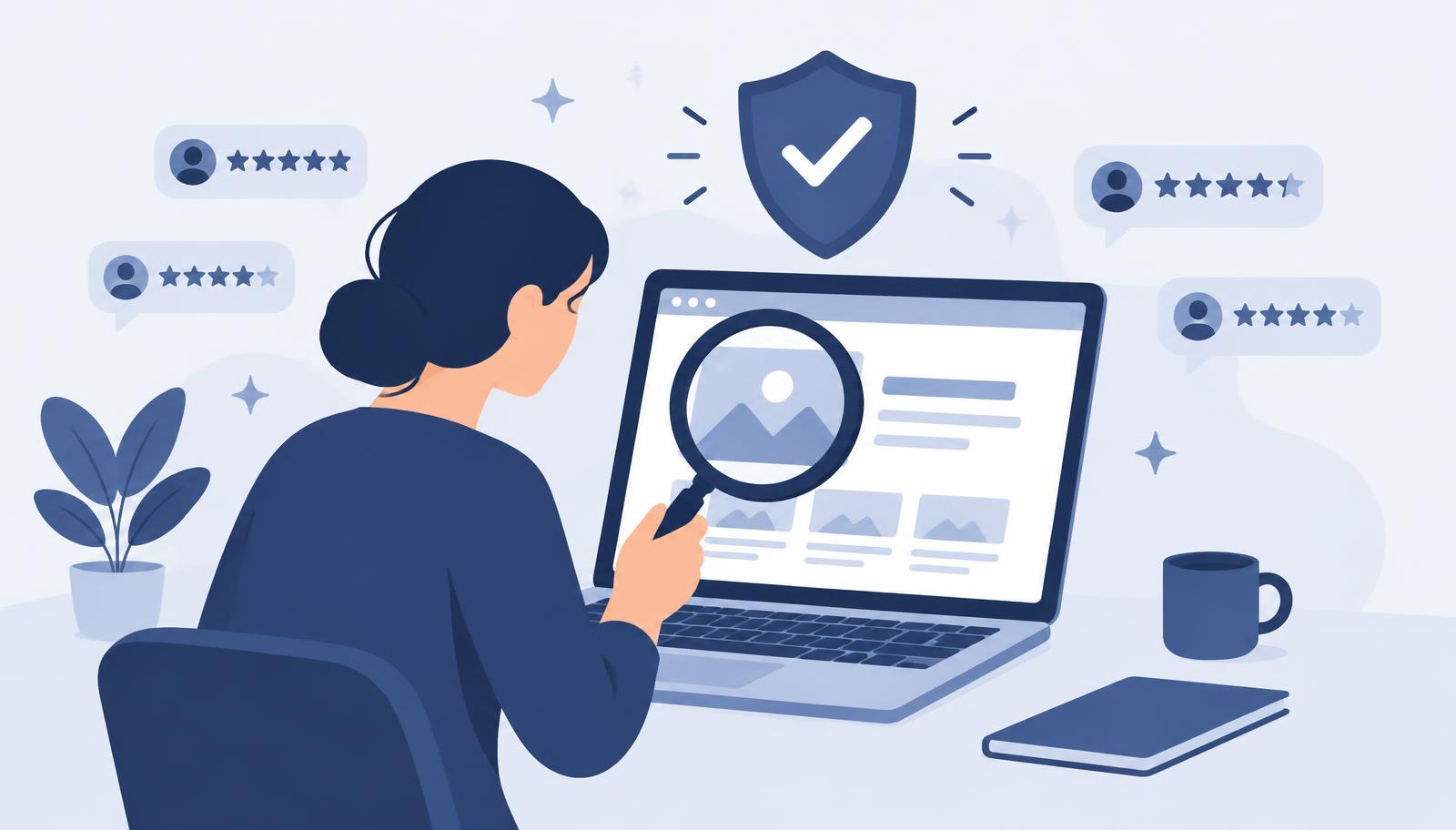
A professional-looking website can be built in an afternoon. A trustworthy business cannot. Before entering your card details on a site you don't know, a few minutes of checking can save you weeks of disputes. This guide gives you a concrete method, in order of importance, to answer one question: is this website legit?
No single check is proof on its own. Scammers copy logos, buy ads and even collect a few reviews. What protects you is the combination: a legit business passes almost all of these checks, while a fraudulent one usually fails several.
1. Search the name followed by "reviews" or "scam"
This is the reflex most people already have — and it works. Type the domain or brand name followed by "reviews", "avis", "scam" or "is it legit". Look beyond the first result: check independent review platforms like byLegit, forums and social networks. What you want is a history: real customers talking about real orders, over several months.
2. Actually read the reviews — don't just look at the score
A 4.8/5 rating means little without context. Open the reviews and ask yourself:
- Are they detailed? Genuine reviews mention products, dates, delivery times, support interactions.
- Are they spread over time? A burst of fifty 5-star reviews in one week is a classic warning sign.
- Are there some negative reviews, answered calmly? A business with only perfect reviews is rarer than a business that handles problems well.
- Are the reviewers verified customers? On byLegit, reviews from verified customers carry a visible badge.
3. Check how old the domain is
Many scam sites are only a few weeks old. A free "WHOIS lookup" (for example on who.is or lookup.icann.org) shows when the domain was registered. A domain created last month that claims "10 years of experience" is telling you something. Age alone doesn't prove honesty — but a very young domain combined with other red flags should stop you.
4. Look for real contact details and legal pages
A legit business can be reached. Check for:
- A legal notice or imprint page with a company name, registration number and physical address.
- Terms of service and a privacy policy that aren't copied-and-pasted gibberish.
- A contact email on the same domain (contact@thedomain.com), not only a generic form or a free webmail address.
- A customer service channel that actually answers — test it with a simple question before ordering.
5. Check the payment methods offered
How a site asks to be paid says a lot. Credit card and PayPal payments give you chargeback protection. Be very careful when a site only accepts bank transfers, gift cards, cryptocurrency or payment apps between individuals — these are nearly impossible to reverse, which is exactly why scammers prefer them.
6. Compare the prices with the market
A brand-new console at 60% below every other retailer is not a bargain, it's bait. Cross-check the price on two or three known shops. Fraudulent sites rely on urgency and greed: countdown timers, "only 2 left", prices that expire in minutes. A legit discount survives a night of sleep.
7. HTTPS is necessary — but nowhere near sufficient
The padlock in your browser only means the connection is encrypted. It says nothing about who's behind the site: scam sites have HTTPS too. Treat it as a minimum requirement (never enter card details on a site without it), never as a trust signal.
8. Check its social presence and footprint
Look up the brand on social networks and on a map service if it claims a physical address. A real business usually leaves traces over time: posts with actual customer comments, photos, mentions by other sites. An account created last month with stock photos and no interaction is another piece of the puzzle.
9. Read the site itself critically
Machine-translated text, broken links, blurry logos stolen from a brand, an "About us" page that says nothing concrete, policies that contradict each other — none of these alone is damning, but they accumulate. Legit small businesses can have imperfect sites; fraudulent ones often have sites that are polished on the homepage and hollow everywhere else.
10. If anything feels off, walk away
The final check is the simplest: if several small things bother you, don't rationalise them away. There is almost always another shop selling the same thing. The few euros you might save are never worth a stolen card number or weeks of dispute procedures.
Already paid and having doubts?
- Contact your bank or card issuer immediately to ask about a chargeback.
- Keep everything: order confirmations, emails, screenshots of the site.
- Report the site to your national consumer protection or fraud reporting service.
- Leave a detailed review on byLegit — your experience is exactly the proof the next shopper will be looking for.
In short
Checking whether a website is legit takes less time than the dispute that follows a bad purchase. Search the name, read the reviews in detail, verify the domain age, the contact details and the payment methods — and when in doubt, walk away. And if you've had an experience, good or bad, share it: that's how the next person checks faster.
Frequently asked questions
- How can I quickly check if a website is legit?
- Search the domain name followed by "reviews", read detailed reviews on an independent platform like byLegit, check the domain's age with a WHOIS lookup, and verify that the site has real contact details and secure payment methods.
- Does the HTTPS padlock mean a website is safe?
- No. HTTPS only encrypts the connection. Scam sites use it too. It's a minimum requirement, not a trust signal.
- What are the biggest red flags of a scam website?
- Prices far below the market, payment only by bank transfer or crypto, a very recently registered domain, no legal notice, and a sudden burst of generic 5-star reviews.
- What should I do if I've been scammed by a website?
- Contact your bank immediately to request a chargeback, keep all evidence, report the site to consumer protection authorities, and leave a detailed review to warn others.
Ready to prove you're legit?
Claim your page for free and start collecting verified reviews.
Discover byLegit Business